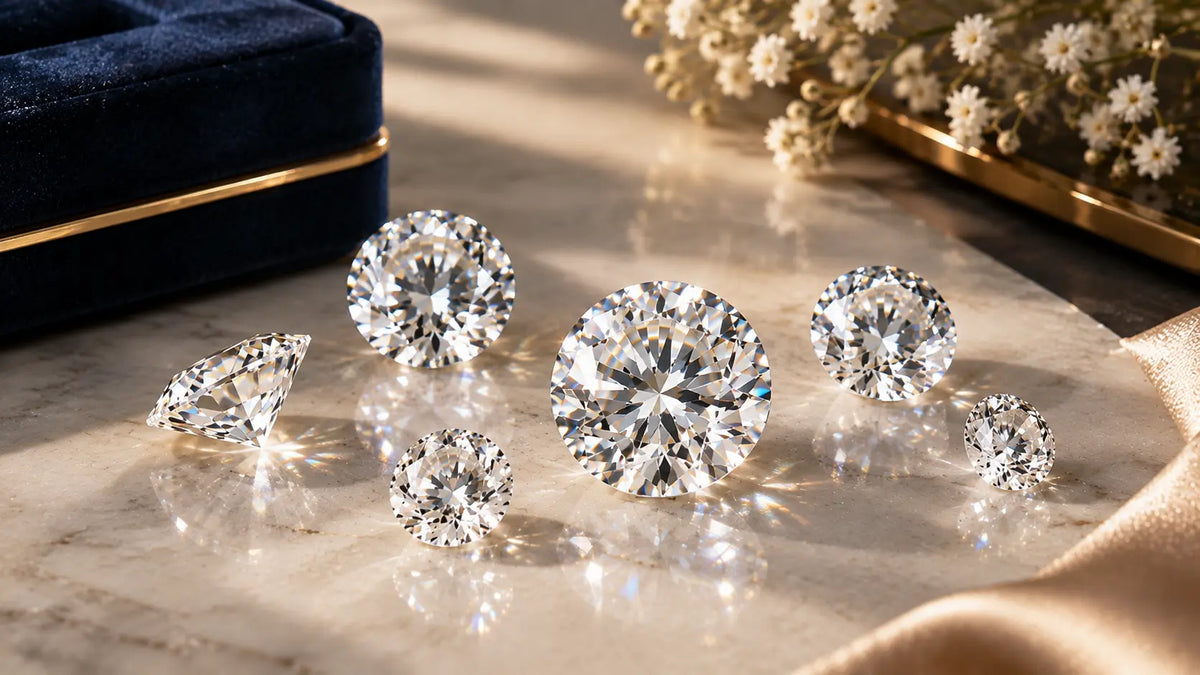
1 Carat Diamond Price in the USA: Latest Trends and Buying Advice
Search "1 carat diamond price" and you'll get answers ranging from $2,000 all the way up to $20,000, all claiming to be correct. Weirdly, they usually are. The catch is that a carat only tells you how much a diamond weighs it says nothing about how it looks, how it was cut, or whether it came out of the ground or a lab. Two 1-carat diamonds can sit thousands of dollars apart and both be fairly priced, once you know what's actually driving that gap.
So here's where prices genuinely sit right now, what's moving them, and what's worth double-checking before you hand over a card.
What Does a 1 Carat Diamond Actually Cost Right Now?
For the specification most people end up buying a natural, well-cut round diamond somewhere around G–H color and VS2 clarity the going rate in 2026 lands at roughly $4,000 to $6,000. That's not a random number; it's where most current pricing data converges for a GIA-certified stone, whether you're buying online or walking into a store.
Below that, budget-to-good-value stones (H–I color, SI1–VS2 clarity, Very Good cut) tend to run $2,800 to $4,000 a perfectly reasonable choice if the goal is a beautiful stone without chasing top grades. Push into premium territory (F–G color, VS1 and above, Excellent cut), and you're looking at $5,500 to $8,500, with truly top-tier stones D–F color, VVS clarity sailing well past $10,000 without much effort.
Lab-grown changes the math entirely. A comparable 1-carat lab-grown diamond runs about $800 to $1,500 somewhere in the neighborhood of 75 to 85 percent cheaper than its natural counterpart. And that gap keeps widening. A lab diamond that would've cost around $4,000 back in 2020 goes for a fraction of that now, purely because production has scaled up so much.
One thing worth knowing before you start comparing numbers from different sites: natural diamond prices aren't fixed the way gold is. They move with global supply and shifting demand 2025 actually saw roughly an 11% drop in natural 1-carat prices before things started recovering heading into 2026's bridal season. So whatever number you're reading, treat it as a snapshot, not gospel.
What Actually Moves the Price?
Carat weight is honestly the least useful number for predicting what a diamond will cost. Here's what actually does the work.
Cut
This is the one people underrate the most. Cut quality how precisely the facets are angled determines how well a diamond throws light back at you. A mediocre cut can make even a high-color, high-clarity stone look flat and lifeless. A great cut, on the other hand, makes a diamond look brighter and often bigger than its actual weight would suggest. If you're choosing where to spend, this is where it counts.
Color
Color runs D (totally colorless) down through the alphabet as a faint yellow tint creeps in. Here's the thing most people don't realize: almost nobody can tell a G from an H color diamond without training and the right lighting setup. That's exactly why G–H sits at the value sweet spot you're paying for a difference you probably won't see.
Clarity
Clarity grades the internal inclusions and surface marks, from Flawless down to Included. Most VS2 and SI1 inclusions are invisible without a loupe. Jumping from SI1 up to VVS1 mostly buys peace of mind, not anything you'd actually notice on the finger.
Certification
An uncertified diamond is a diamond you're taking on faith. GIA and IGI certification independently verify the actual grading, and it shows up in price for good reason a certified stone consistently costs more than a visually identical uncertified one, because you're paying for someone else to have already checked the seller's work.
Natural vs. Lab-Grown
This is the biggest lever by far. Lab-grown diamonds are chemically identical to natural ones, graded on the same scale the only real difference is that one formed over millions of years underground and the other grew in a lab over a few weeks. That production difference alone accounts for the 75-to-85-percent price gap.
Shape
Round brilliants cost more per carat than other shapes, mostly because the cutting process sacrifices more of the original rough stone to achieve maximum brilliance. Ovals, cushions, and emerald cuts typically run 20 to 35 percent cheaper for comparable quality, partly because they retain more of the rough during cutting.
Market Conditions
Mining output, global supply, and the steady shift toward lab-grown all move natural diamond pricing over time. The market has genuinely reshaped itself over the past couple of years as lab-grown has gone from a niche alternative to a mainstream option.
Natural vs. Lab-Grown, Side by Side
| Factor | Natural Diamond | Lab-Grown Diamond |
|---|---|---|
| Formation | Millions of years underground | Weeks, in a controlled lab |
| Typical 1-Carat Price (USA) | $4,000 – $6,000 (mid-range) | $800 – $1,500 |
| Physical Composition | Carbon crystal structure | Identical carbon crystal structure |
| Certification | GIA, IGI, and other labs | GIA, IGI, and other labs |
| Resale Value | Generally holds value better | Currently less predictable resale |
| Visual Difference | None visible to the naked eye | None visible to the naked eye |
Neither type is distinguishable from the other without lab equipment same cut, same color, same clarity scale. What people are actually choosing between is price, how much resale matters down the line, and whether the origin story means anything to them personally. That's it. Sparkle isn't the deciding factor here.
What to Actually Check Before You Buy
Start with the certificate, not the stone. Confirm GIA or IGI certification before you get attached to a particular diamond, and make sure the certificate number matches the exact stone sitting in front of you not a "similar" one from the same batch.
If you're trading off somewhere, let it be color or clarity, not cut. A diamond with an excellent cut and slightly lower color or clarity will usually look better and cost less than one that maxes out color and clarity while skimping on cut.
Figure out early whether resale matters to you. If there's any chance this ring gets upgraded, resold, or passed down someday, a certified natural diamond holds value more predictably right now. If resale isn't the point and budget is, lab-grown gets you noticeably more visible size for the money.
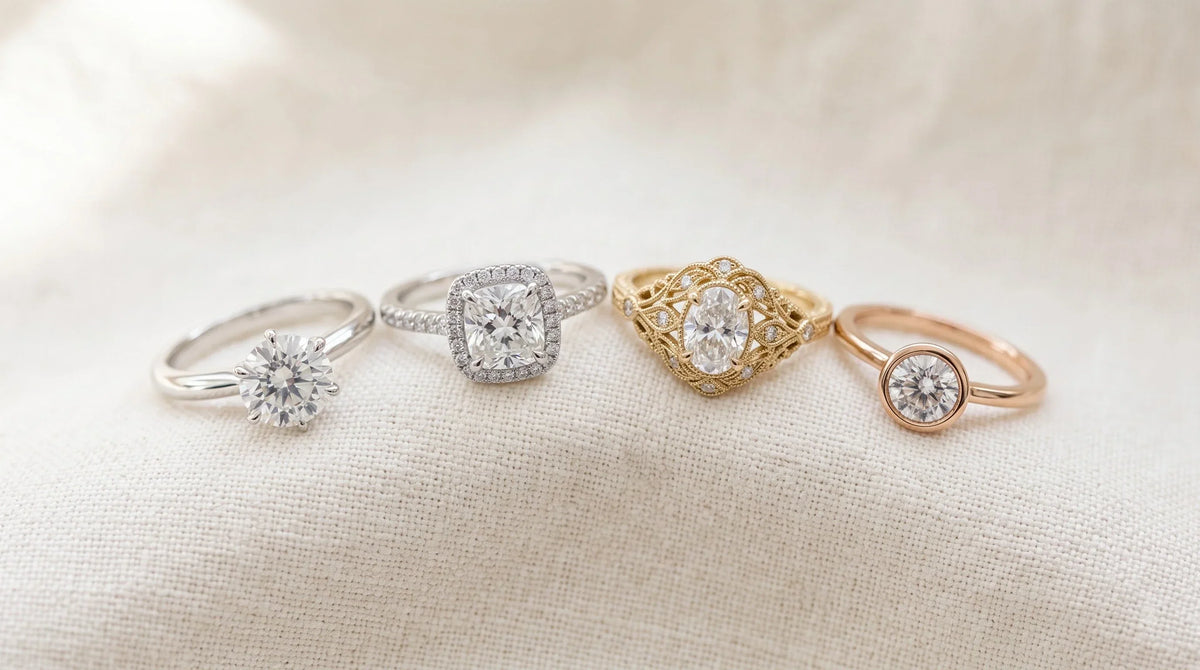
Price the finished ring, not just the loose stone. Metal, setting complexity, and labor all stack on top of whatever the diamond itself costs $4,500 stone doesn't magically become a $4,500 ring once it's mounted.
For anything in the premium range, get a second opinion. An independent appraisal alongside the seller's certification is cheap insurance relative to what you're spending.
And buy from someone who states natural or lab-grown clearly, every single time, no exceptions. At this point, any retailer who's vague about it is telling you something.
Frequently Asked Questions
What is the average price of a 1 carat diamond in the USA?
Somewhere around $4,000 to $6,000 for a natural, well-cut stone in the G–H color, VS2 clarity range that's where most 2026 pricing data lands. The wider market stretches from about $2,800 for budget grades up to $8,500 or more at the premium end.
How much does a 1 carat lab-grown diamond cost?
Generally $800 to $1,500 for comparable quality, which works out to roughly 75 to 85 percent less than an equivalent natural diamond.
Why does the same carat weight vary so much in price?
Because carat only measures weight cut, color, clarity, certification, and shape all move independently of that number, and together they're what actually sets the price.
Does cut quality make a noticeable difference?
Yes, more than most people expect. A well-cut diamond throws light back more effectively and can look brighter, and sometimes bigger, than a poorly cut diamond of the exact same weight.
Is lab-grown a smart choice for an engagement ring?
For a lot of buyers, yes. It's chemically and visually identical to natural, graded the same way, and costs a fraction of the price the main trade-off is resale, which currently favors natural stones.
Will prices keep shifting?
Almost certainly. Natural diamond prices move with supply and demand, and lab-grown production keeps expanding, so whatever number you're looking at today is a snapshot, not a fixed rate.
Conclusion
There isn't really one "1 carat diamond price" there's a range built from cut, color, clarity, certification, shape, and increasingly, whether the stone grew underground or in a lab. In the USA right now, that means roughly $2,800 to $8,500+ for natural stones depending on quality, centered around $4,000–$6,000 for what most buyers actually choose, with lab-grown running dramatically lower for the same specs. Don't chase the lowest price tag or the biggest carat number on the label figure out which of the 4Cs actually change how the stone looks and holds up over time, and buy from someone straightforward about where it came from.

Leave a comment
This site is protected by hCaptcha and the hCaptcha Privacy Policy and Terms of Service apply.